August: The Book Edition
Updated: Aug 16

What better way to pass a summer day than curled up with a good book?
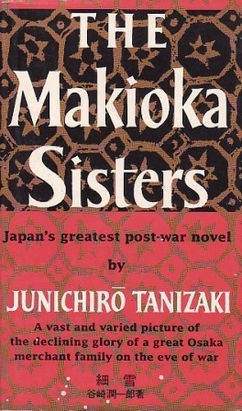
I am currently rereading The Makioka Sisters, Jun’ichiro Tanizaki’s masterpiece, translated into English by Edward G. Seidensticker. I come back to this book every decade or so and become completely absorbed in the world of the four Makioka sisters. Set in pre-WWII Showa-era Japan, Tanizaki beautifully captures the sisters’ day to day lives, as well the changing social landscape of the time, in a country caught between tradition and Westernization.
I also recently decided to take advantage of the seasonal downtime to review my reference library. It is not particularly large, but there are some books that have accompanied me through all my moves. I would like to recommend several of them to those wishing to learn more about modern and contemporary Japanese works on paper.
One can find so many books on ukiyo-e, the historic woodblock prints, but there have not been as many publications on the topic of contemporary Japanese prints. I am hopeful that this is starting to change as more and more museums are highlighting the Japanese art in their collections, and more exhibitions of 20th and 21st century Japanese prints are taking place.
There is, of course, no such thing as a definitive bookshelf. Part of the pleasure of looking at modern and contemporary Japanese works on paper is discovering just how many paths there are to follow, from woodblock and stencil to lithography, etching and abstraction, and from the great names to artists who remain surprisingly little known outside Japan. The books referenced below are simply some of the books I return to, learn from and enjoy having close at hand.
They have provided me with much information and reflection over the years. Some of these are easily available, some may be harder to unearth. Many of them, especially my parents' and nephew's books, are written in an engaging, personal tone since the subjects for the most part are living artists whom my family has known for a long time.
One of my prized possessions is the deluxe edition of James Michener's book, The Modern Japanese Print, an Appreciation, published in 1962. It is an oversize volume encased in a wooden box and includes ten original prints. I attended an auction of Japanese art in New York many years ago; a collection of 20th century Japanese prints was being sold after the collector's passing. Lot after lot went by and each one found a buyer. There was a lunch break in the auction proceedings and then it was time to turn to the books that the collector had acquired over the years. I was delighted to find that the Michener deluxe edition was up for sale, and I went around to everyone I knew attending the sale to ask them not to bid on that particular lot so that I could afford it. (The book was printed in an edition of 510 and at times it is very difficult to obtain.) Much to my delight, all the attendees were very kind, and I was the lone bidder for the Michener book.

After that, it made complete sense to add Oliver Statler's book Modern Japanese Prints: An Art Reborn to my shelf. Published in 1956, Mr. Statler documents the lives of many sosaku hanga or creative print artists. The immediate postwar period in Japan was an exciting time as printmakers went beyond traditional woodblock printmaking to experiment with new techniques and discovered that there was a receptive audience for their work - Americans who wanted to return home with a souvenir of Japan.

Noriko Kuwahara's recent book Japan-US Exchanges in Postwar Prints 1945-1965 is a fascinating documentation of that time period. Written in Japanese, it has been good practice for my reading Japanese, although Kuwahara-san's colleague Ajioka Chiaki has provided English summaries of each chapter, which is very helpful.

I also recommend two books by Lawrence Smith, former Keeper of the Department of Japanese Antiquities at the British Museum: Modern Japanese Prints, 1912-1989 and Contemporary Japanese Prints: Symbols of a Society in Transition. Curators write about artists with one eye on the future, seeking to understand the artists' place in the present and what their legacy will be, and Lawrence Smith was particularly good at identifying the artists and ideas that would come to define modern Japanese printmaking, while placing their work within the broader artistic and social currents of their time.
Some books that I return to again and again for reference focus on one specific artist. For example, Saito Kiyoshi Graphic Awakening was the catalogue for an exhibition organized by Rhiannon Paget and features several essays which I found very informative. Chris Van Otterloos's book, Tanaka Ryohei: Etchings of Rural Japan is another book that revealed a lot of background material on the artist well known for his representational landscapes.
My family's contributions to the field have been substantial. My parents wrote People Who Make Japanese Prints: A Personal Glimpse in 1982, which was followed by Collecting Modern Japanese Prints: Then and Now in 1994, with monographs on Makoto Ouchi, Shuji Wako, and Toko Shinoda in between, and then finally Karhu @77 in 2004. The mantle was taken up by my nephew Lucas with his monograph on the kappazuri stencil artist Hiromitsu Takahashi The DyeIng Art of Kappazuri published in 2020.

Over the next few months, publications on contemporary printmakers Takeda Hideo and Matsubara Naoko will be released so there will be more to learn about these printmakers, both well established in their careers. I will keep you posted when I have exact titles of these monographs.
I hope that the books mentioned above encourage further looking, reading and discovery, and perhaps introduce a few titles worth adding to your own shelves.